From Garden to Door: A Midwinter Wreath-Making Ritual
A quiet celebration of nature in midwinter
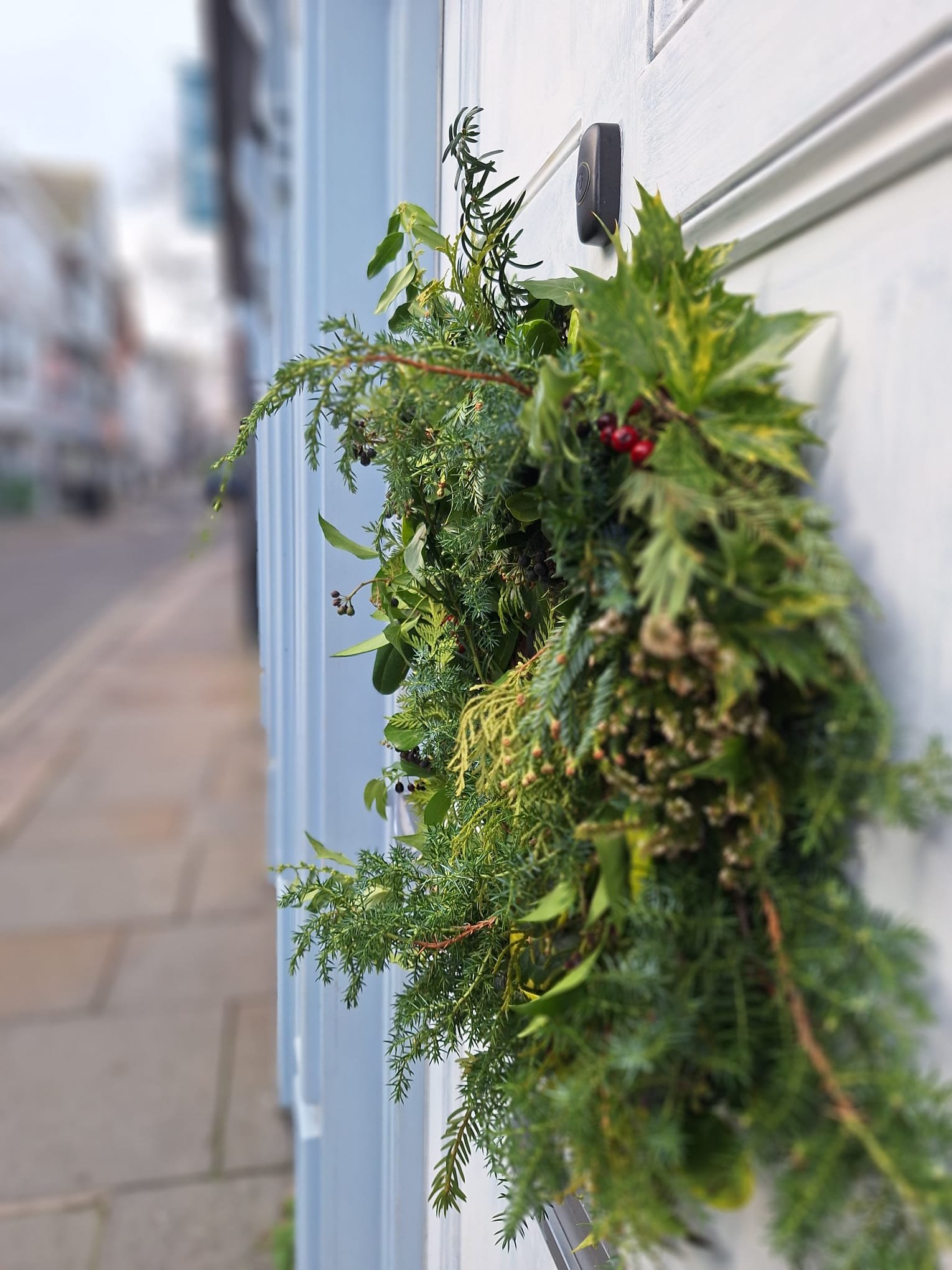
At a time of year when the garden can feel bare and the landscape subdued, Christmas wreaths offer a gentle reminder that life continues, quietly and persistently. They are a celebration of evergreens, texture and resilience — of foliage that holds its colour through the darker months and brings something living to our front doors.
For me, wreath-making has always been about honouring nature at a time when it can feel dormant or bleak. Ivy, bay, pine, fir and holly become symbols of continuity, and weaving them together feels like a small but meaningful act of seasonal celebration.
Why I make wreaths
Before I was a gardener, I was — and still am — an artist at heart. I love working with my hands, being creative, and making something tangible from natural materials. Wreaths sit beautifully at the meeting point of art, craft and gardening. They’re slow to make, satisfying, and rooted in the rhythms of the season.
Every wreath I make is completely compostable, sustainably made, handmade and recyclable. There’s something important to me about knowing that once Christmas has passed, the wreath can return gently to the earth without waste.
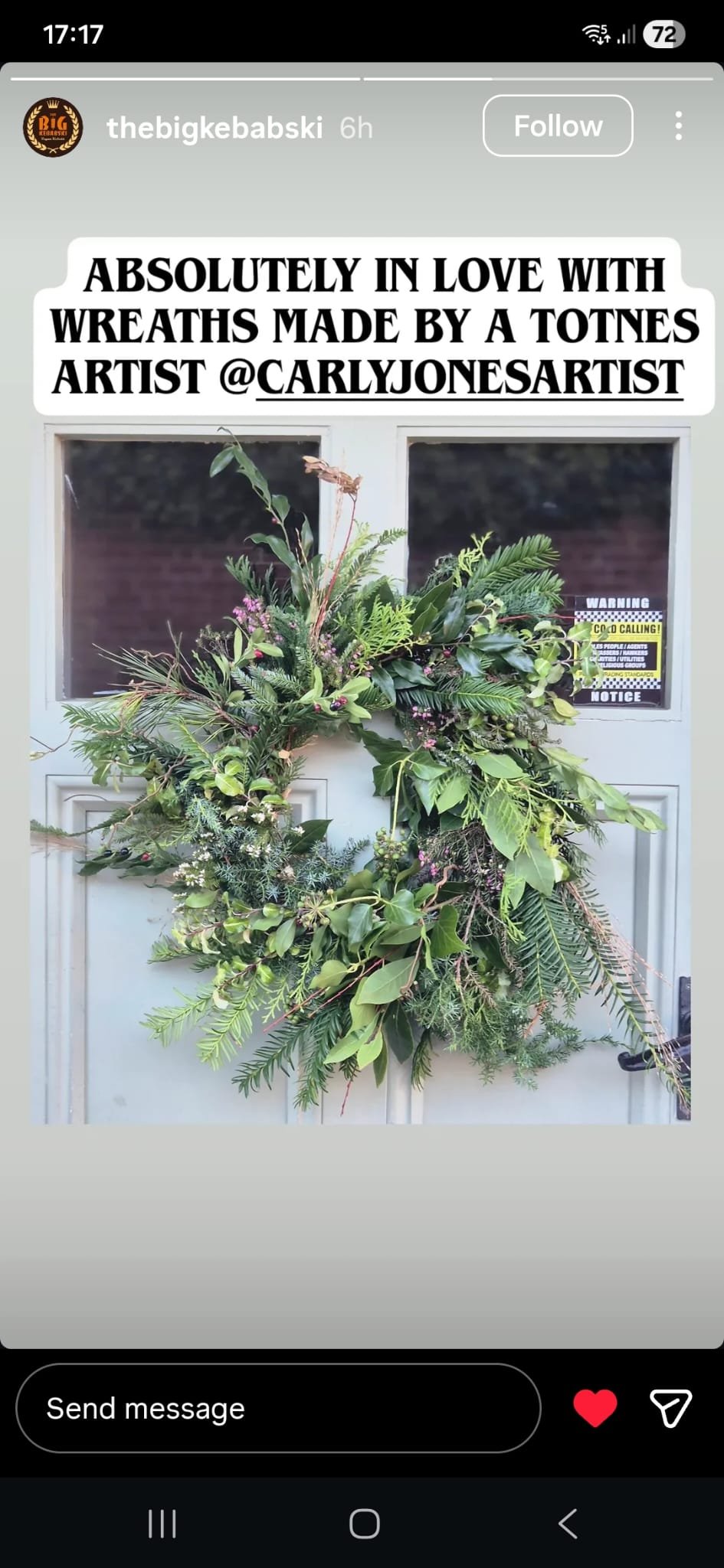
I began making wreaths simply for myself, then for friends and family. Eventually, I started leaving them outside my front door here in Totnes, with a quiet invitation for people to take one and leave some money if they wished. It felt informal, honest and community-led — very much in keeping with how I like to work.
For the last two years I’ve continued making and selling them for a very affordable £10 each. Many wreaths sell for £40 or £45, but that’s never been my aim. I make them because I love it, and because it brings me real joy knowing they’ll be displayed on doors throughout Christmas, becoming part of people’s seasonal rituals.
A few tips for making your own wreath
If you’re tempted to have a go yourself, here are a few gentle guidelines I follow:
Choose foliage that lasts. Evergreens are your friend — they’ll stay fresh and vibrant right through to Christmas and beyond.
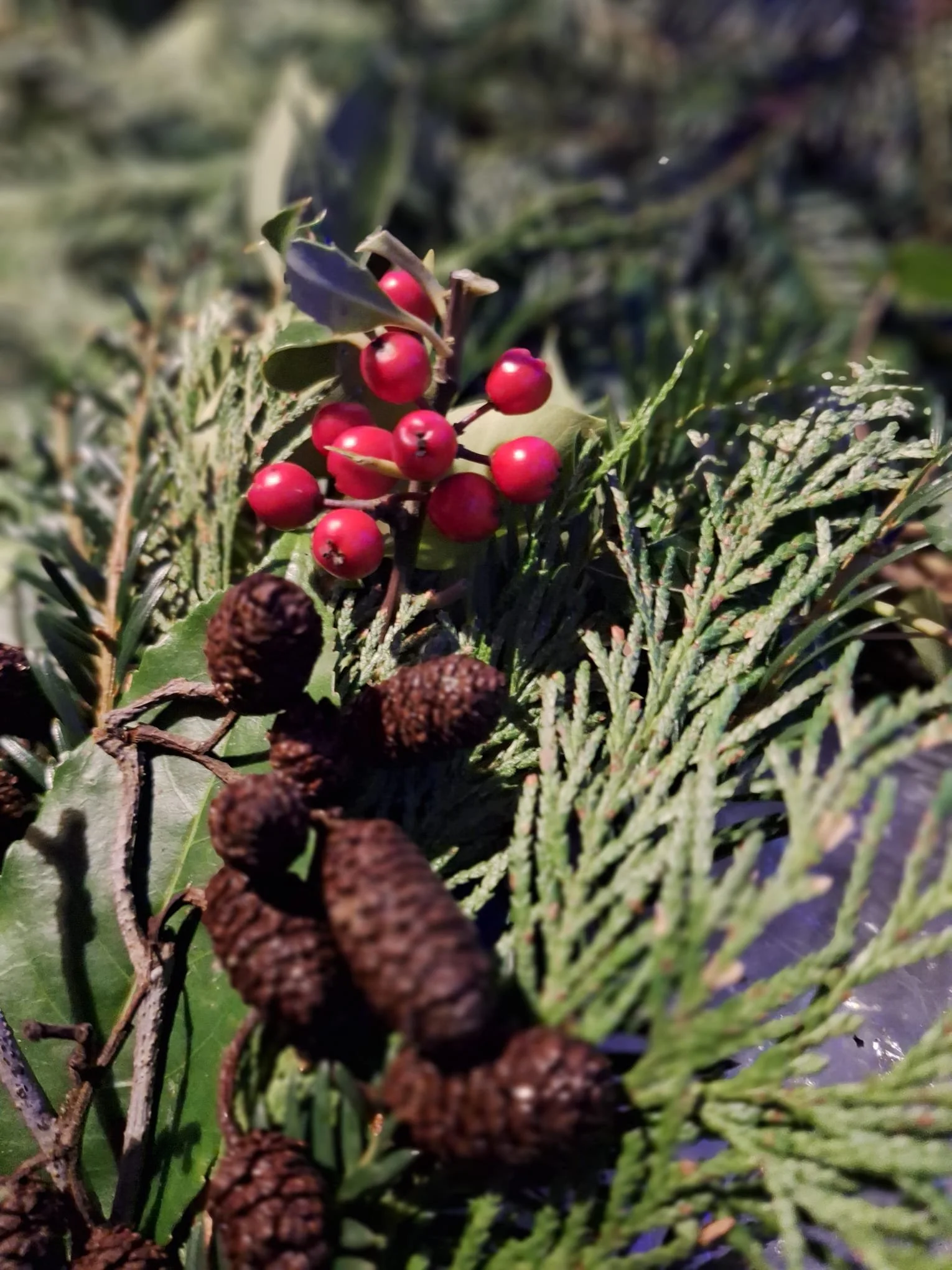
Save dried treasures. Seed heads and dried flowers collected earlier in the year can add beautiful texture. Teasel, miscanthus, honesty, strawflower and pine cones found on the ground all work wonderfully.
Forage mindfully. Where possible, collect foliage that has already fallen, particularly from pine trees. Never take too much from one tree or bush, and always seek permission from the landowner.
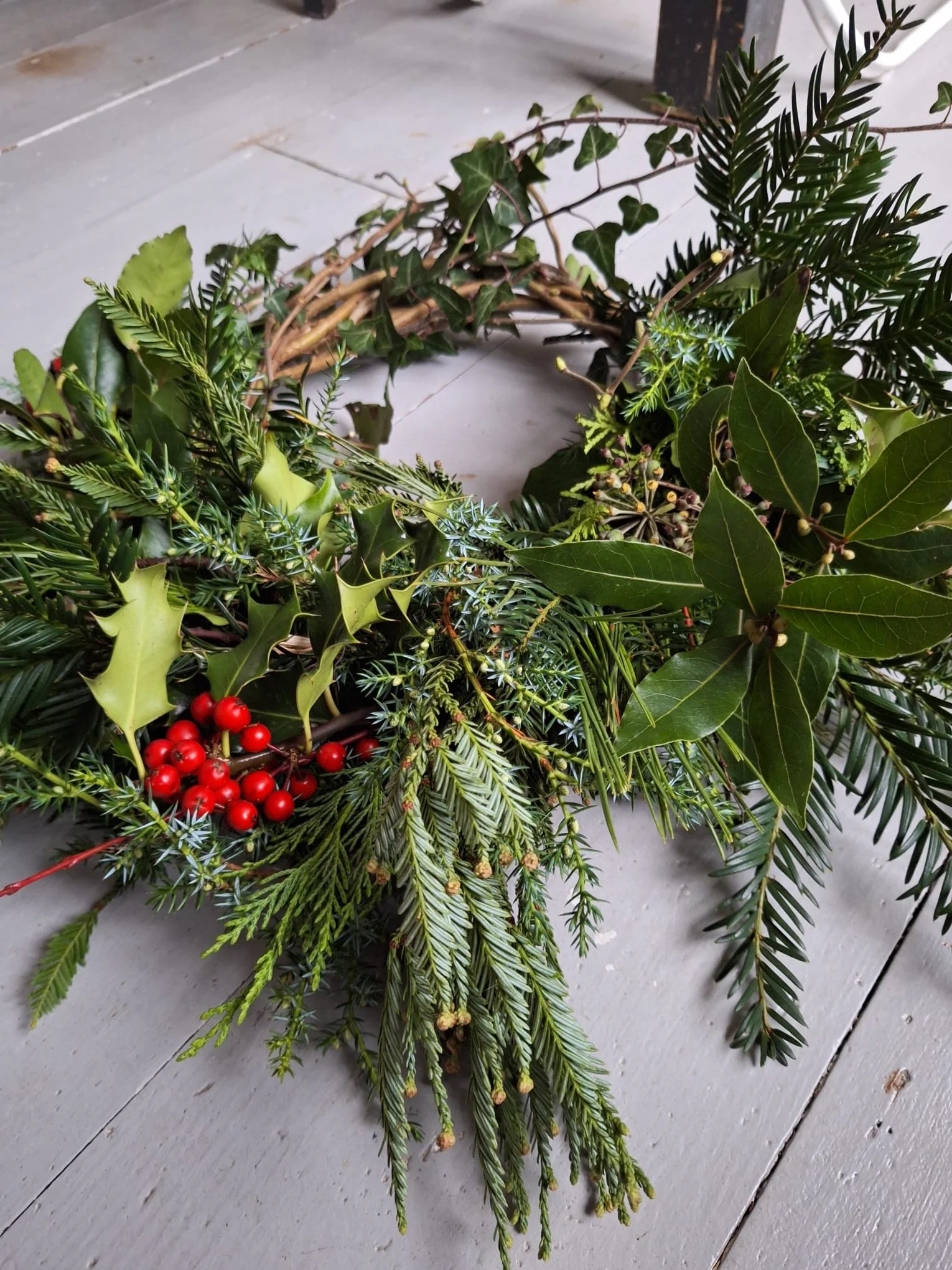
Use natural bases. Sustainably sourced rattan is biodegradable and can go straight into the compost bin at the end of Christmas, wreath and all.
Try hazel or willow. Fresh hazel twigs (especially from coppiced hedges) are my favourite for making a base. Willow works well too. Twist and weave branches together, then either weave foliage directly into the base or tie small bundles on using rattan.
Play with form. A wreath doesn’t have to be traditional. Try filling just one half with foliage and leaving the other more open, perhaps wrapped simply with ivy. These asymmetrical designs feel more artistic and personal.
Some of my favourite materials to work with include ivy, bay, pine, fir, conifer, holly, heather, teasels, honesty, miscanthus, spruce, cedar, eucalyptus and rosehip — but experimentation is encouraged. The main thing is choosing materials that will still look good well after Christmas Day.
A quiet moment of joy
One of my favourite moments each year is walking up Totnes High Street and spotting one of my wreaths on a door. Over the weeks leading up to Christmas, I’ll notice more dotted around the town — small, familiar signs of something I made by hand becoming part of someone else’s celebration.
It’s a quietly joyful feeling. A reminder that slow, thoughtful work matters, and that creativity — like nature — has a way of weaving itself into everyday life, even in the darkest months.